
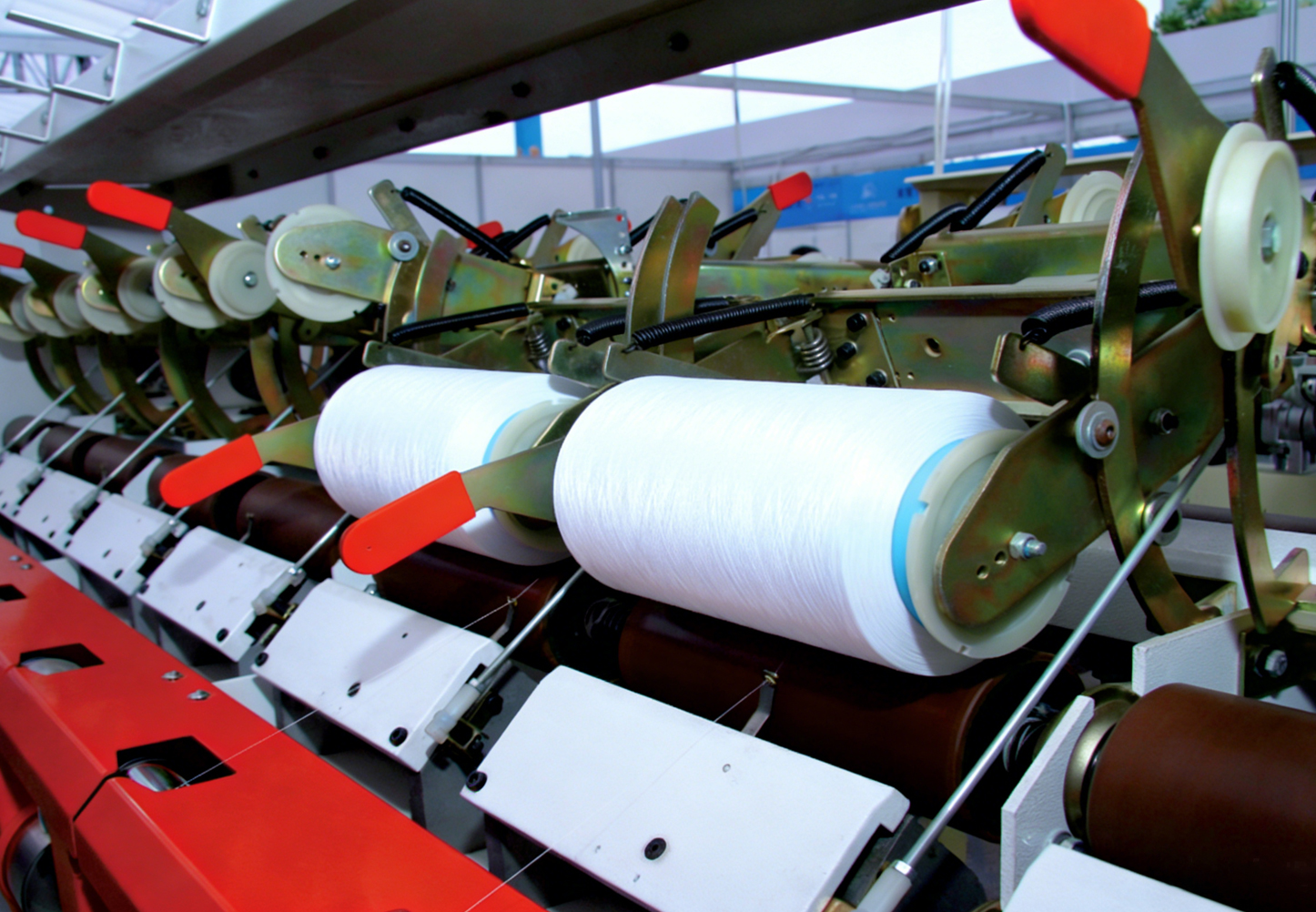

1. Key Pain Points in Textile & Light Industry Equipment Operation
Textile and light industry equipment (spinning machines, weaving machines, knitting machines, printing and dyeing machines, non-woven fabric equipment, garment processing machines, etc.) operates in special working environments, facing multiple challenges that restrict production efficiency and equipment stability:
- Massive fiber dust intrusion: A large amount of cotton, wool, chemical fiber and other dust is generated during textile production, which is easy to enter the bearing interior, causing jamming, wear and premature failure of the bearing.
- Humid & corrosive environment: In printing and dyeing, non-woven and other processes, equipment is often in contact with water, chemical dyes and auxiliaries, leading to bearing rust, corrosion of the bearing seat and reduced service life.
- High-speed operation & frequent start-stop: Textile equipment such as spinning frames and looms run at high speed for a long time, and frequent start-stop will generate large vibration, which easily causes bearing loosening, inner ring creep and abnormal noise.
- Multi-pivot shaft misalignment: The long shaft installation of textile machinery (such as conveyor rollers, weaving machine main shafts) has poor coaxiality, resulting in uneven bearing stress, eccentric wear and overheating.
- Difficult maintenance & long downtime: Traditional bearings need to be assembled separately with the bearing seat, and the disassembly and replacement process is complicated. Once a failure occurs, it will lead to long production downtime and affect order delivery.
2. Core Advantages of Pillow Block Bearing Unit for Textile & Light Industry
Aiming at the special working conditions of the textile and light industry, the pillow block bearing unit is optimized and upgraded in structure, material and sealing, providing reliable and efficient support for equipment operation:
- Enhanced dustproof sealing performance: Equipped with three-layer composite sealing structure (inner dust cover + double-lip rubber seal + outer protective cover), which can effectively block fiber dust, lint and other tiny particles, preventing dust from entering the bearing cavity and ensuring stable operation in dusty textile workshops.
- Corrosion & rust resistance: The bearing adopts high-quality bearing steel with anti-rust passivation treatment, and the bearing seat is made of corrosion-resistant cast iron or optional stainless steel, which can resist the erosion of moisture, chemical dyes and auxiliaries, adapting to the humid and corrosive environment of printing and dyeing workshops.
- High-speed stability & anti-vibration: After precision machining and dynamic balance testing, the bearing has good high-speed performance, and the optimized set screw/eccentric sleeve locking structure can firmly lock the shaft, effectively resisting the vibration generated by high-speed operation and frequent start-stop, and avoiding bearing loosening.
- Excellent self-aligning ability: The spherical outer ring of the bearing cooperates with the bearing seat, which can automatically compensate for ±2° shaft misalignment, solve the problem of poor coaxiality of multi-pivot installation of textile machinery, reduce additional load and prolong bearing service life.
- Integrated design for easy maintenance: The bearing and bearing seat are integrated into one unit, which can be installed and replaced directly without separate matching and alignment. The replacement can be completed within 15 minutes, greatly reducing equipment downtime and maintenance costs.
- High temperature resistance: Pre-filled with high-temperature resistant lubricating grease, which can adapt to the working temperature of -20℃~120℃, meeting the high-temperature operation requirements of textile drying, printing and dyeing and other processes.
3. Typical Application Equipment & Recommended Models
Textile & Light Industry Equipment Type | Recommended Bearing Model | Common Shaft Diameter | Typical Application Scenarios |
|---|---|---|---|
Spinning Machine & Weaving Machine | UCP204, UCP205, UCP206 | 20mm, 25mm, 30mm | Spinning frames, looms, warping machines, sizing machines |
Printing & Dyeing Machine | UCP207, UCP208, UCF208 | 35mm, 40mm, 45mm | Dyeing machines, printing machines, finishing machines |
Non-woven Fabric Equipment | UCT205, UCP206, UCT207 | 25mm, 30mm, 35mm | Non-woven fabric production lines, needle punching machines, spunbond machines |
Garment Processing Machinery | UCP204, UCT204, UCP205 | 20mm, 25mm | Sewing machines, ironing machines, garment conveying lines |
Textile Conveyor & Lifting Equipment | UCP208, UCP209, UCF209 | 40mm, 45mm, 50mm | Textile raw material conveyors, fabric elevators, material sorting lines |
4. Performance Comparison Table
Comparison Item | Pillow Block Bearing Unit | Ordinary Bearing + Separated Housing |
|---|---|---|
Installation Difficulty | Low; integrated unit, plug-and-play, no complex alignment | High; separate matching required, repeated alignment, time-consuming |
Dustproof Performance | Three-layer composite seal, effectively blocking fiber dust and lint | Poor sealing, easy to enter fiber dust, leading to bearing jamming |
Corrosion & Rust Resistance | Anti-rust passivation treatment, optional stainless steel, corrosion-resistant | Easy to rust and corrode in humid and chemical environments |
High-speed & Anti-vibration | Precision dynamic balance, optimized locking structure, stable at high speed | Poor stability at high speed, easy to loosen and generate noise |
Maintenance Cost | Quick replacement within 15 minutes, low downtime and maintenance cost | Complex disassembly and assembly, downtime ≥1 hour, high maintenance cost |
Service Life (Textile Working Condition) | Average service life ≥12,000 hours | Average service life ≤5,000 hours, frequent replacement |
5. Installation & Maintenance Guidelines
5.1 Installation Steps
- Clean the equipment shaft and the mounting surface of the bearing seat, remove burrs, oil stains, fiber dust and lint to ensure a smooth and clean mounting surface.
- Fix the bearing seat on the equipment frame with bolts, pre-tighten the bolts (do not fully lock them) to reserve adjustment space for aligning the shaft.
- Slide the bearing unit onto the equipment shaft, adjust the position to align with the roller, sprocket or main shaft, then tighten the set screw (or eccentric sleeve) to lock the bearing firmly on the shaft.
- Manually rotate the shaft to check for jamming, abnormal resistance or noise; if everything is normal, fully lock the bolts of the bearing seat.
- Run the equipment with no load for 30 minutes, check the bearing temperature (≤75℃) and vibration status, and put it into formal production after confirming no abnormalities.
5.2 Maintenance Tips
- Periodic inspection: Check the bearing temperature, vibration, seal integrity and fiber dust accumulation every week; if abnormal noise, overheating or oil leakage is found, stop the machine for inspection and handling in time.
- Lubrication replenishment: For equipment operating 24 hours a day, replenish food-grade high-temperature lubricating grease every 5 months; for intermittent operation equipment, replenish it every 10 months, and the grease filling amount is 1/3 of the bearing cavity.
- Dust cleaning: Regularly clean the fiber dust and lint around the bearing unit with a brush or compressed air to avoid accumulation affecting the sealing effect and heat dissipation.
- Replacement standard: When the bearing has obvious wear, rotation jamming, seal damage or corrosion, replace the bearing unit in time to avoid affecting the normal operation of the textile equipment.